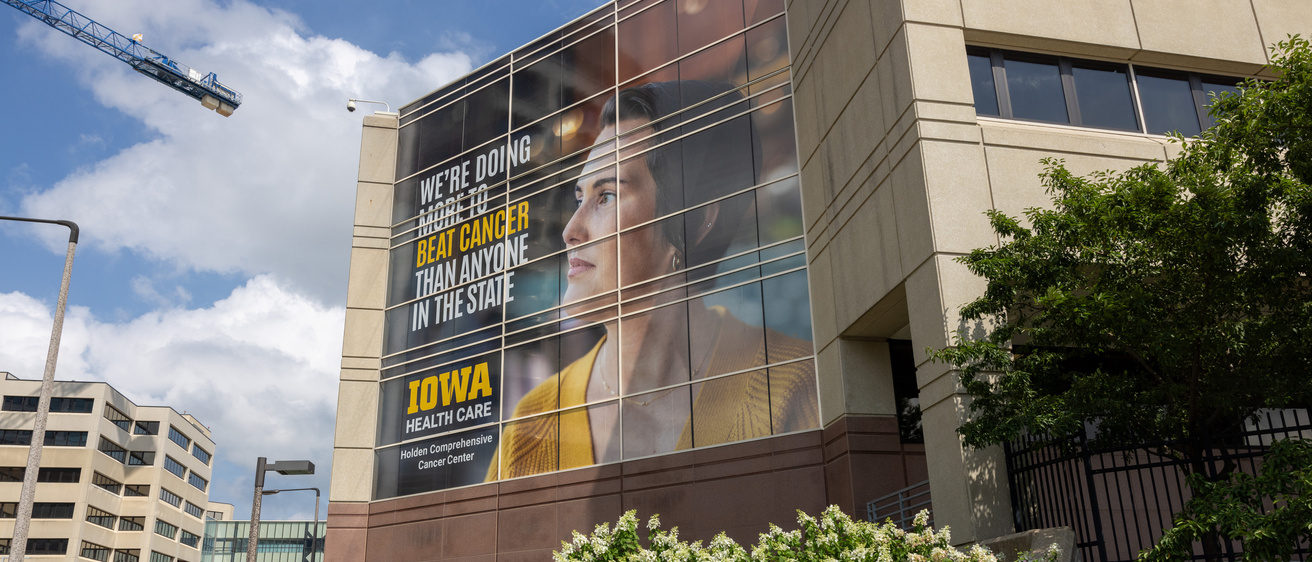
Recent reports on Iowa's cancer rates have raised concerns, so encouraging news about progress against the disease is especially welcome. Late July and August have seen major advances in three new treatment options for some of the deadliest cancers, offering real hope of improved survival for patients. These new therapies are cause for celebration for everyone involved in caring for patients with cancer, but UI Health Care’s cancer team is especially proud to have contributed to bringing each of these new options to Iowans.
Iowans gain access to a game changing drug for pancreatic cancer
In late July, UI Health Care and Mission Cancer + Blood were both approved to administer a promising new drug, daraxonrasib, to patients undergoing treatment for metastatic pancreatic cancer. When the results of a phase 3 clinical trial for daraxonrasib were announced at the ASCO annual meeting in late May, they were greeted with a standing ovation. The drug, which was fully approved by the FDA on Aug. 26, has been hailed as a groundbreaking advance that could dramatically change the outlook for patients with pancreatic cancer, one of the deadliest and hardest to treat cancers. Read more here.
UI Health Care research advances two new options for metastatic melanoma
In early August, the U.S. Food and Drug Administration granted accelerated approval for TUDRIQEV,TM a viral therapy previously called “RP1,” in combination with nivolumab for advanced melanoma. This oncolytic virus breaks up tumors and makes them visible and vulnerable to the patient's own immune system.
UI Health Care cancer researchers, led by medical oncologist and melanoma expert Mohammed Milhem, MBBS, have spent years studying the use of oncolytic viruses in combination with immunotherapies to improve outcomes for patients with melanoma that has metastasized. Milhem helped lead the phase 3 clinical trial that provided data showing that the new treatment benefited patients with no other options, and he provided his expert opinion directly to FDA officials as they made their decision.
Learn more about the treatment and one of Milhem’s patient success stories.
The second melanoma breakthrough was announced in mid-August; on Aug. 19 the news media was full of stories heralding positive results from a phase 3 clinical trial of a new personalized cancer vaccine against advanced melanoma. Again, UI Health Care was a leader in bringing this therapy to patients as one of the first sites in the country to participate in the clinical trial starting in 2024.
A key feature of these vaccines, developed by Moderna and Merck, is that they are tailored to target each patient’s unique tumor. Genetic information from the tumor is used to create a personalized vaccine that will teach the patient’s own immune system to target tumor cells wherever they are in the patient's body.
The topline results from the clinical trial suggest that a combination of the personalized vaccine with the immunotherapy pembrolizumab helps prevent melanoma from returning. Read more about the clinical trial here.
This therapy is not yet FDA approved, and the next steps will be for the researchers to continue to follow participants’ outcomes over time, analyze the final data from the clinical trial, and present those results to the FDA.
“I am really proud of our participation in this research,” Milhem says. "It shows our melanoma program is truly at the cutting edge of care and that the expertise available here for Iowans is in tune with the newest therapies.”